
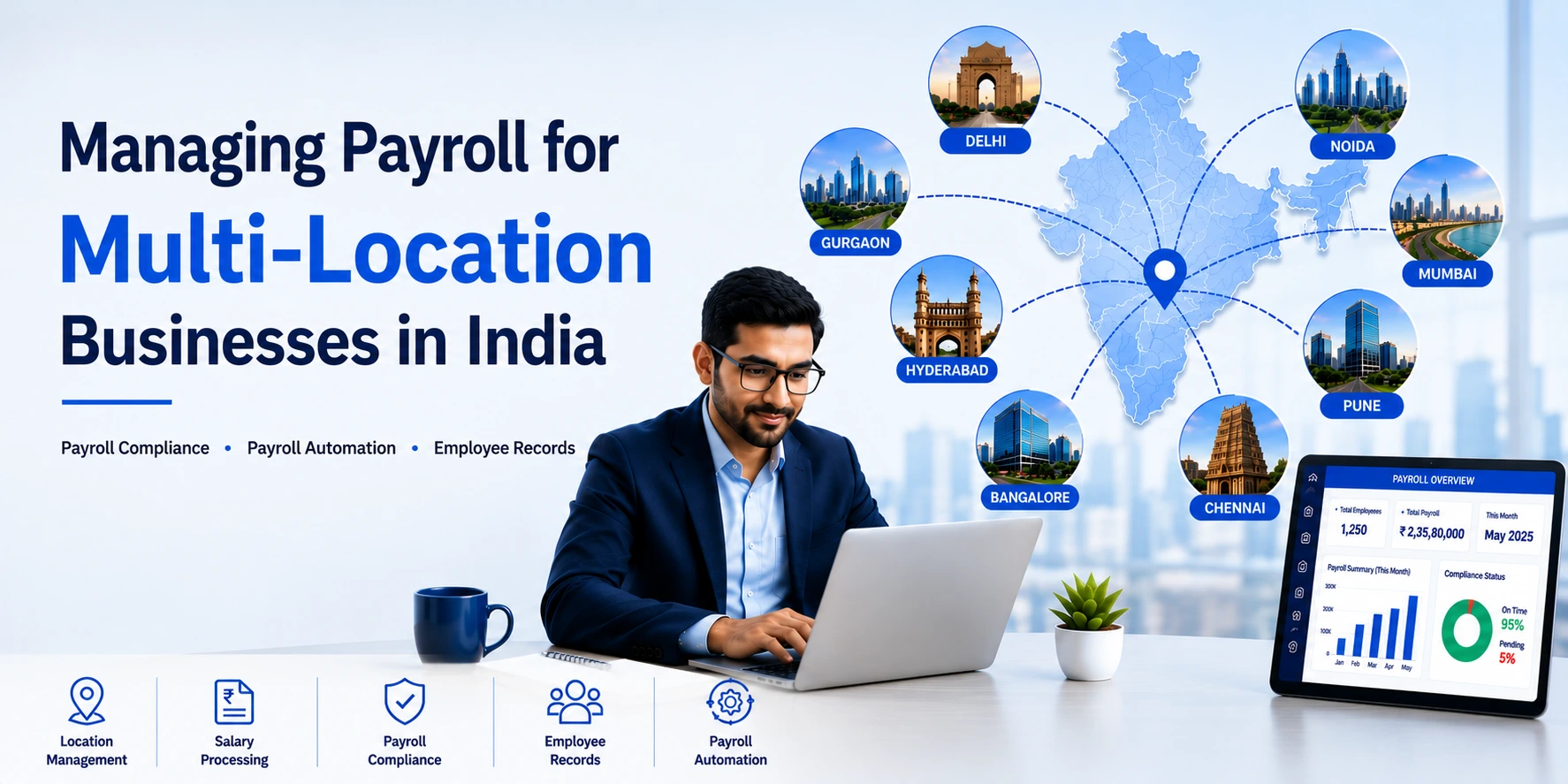
Managing payroll becomes increasingly challenging as businesses expand across multiple locations. Companies operating multiple offices, factories, or branches must coordinate attendance tracking, salary processing, leave management, employee records, and statutory compliance across every location. Even a minor error in attendance data or statutory deductions can affect payroll accuracy, employee satisfaction, and regulatory compliance. As organisations grow, many choose to partner with experienced payroll outsourcing companies in India to simplify payroll management, reduce administrative workload, and improve operational efficiency. A modern payroll system goes beyond salary calculations by integrating attendance management, leave records, payroll processing, and statutory compliance into a single workflow while ensuring employees are paid accurately and on time. According to Deloitte’s Global Human Capital Trends report, organisations continue investing in digital HR technologies to improve operational efficiency, making payroll automation an essential part of modern workforce management.
Challenges of Managing Payroll for Multi-Location Businesses
Managing payroll for a single office is already a detailed process, but it becomes significantly more complex when a business operates across multiple locations. Each branch may follow different working hours, attendance systems, leave policies, and salary structures, making payroll management more challenging. For example, a retail chain or manufacturing company operating across different states in India must collect attendance and employee data from every branch before processing monthly salaries. Differences in attendance systems, approval workflows, and payroll policies can further increase the risk of processing delays and compliance errors. If any location submits incomplete or inaccurate information, salary processing may be affected, resulting in payment delays or compliance issues. HR teams must also manage overtime payments, leave balances, employee benefits, and statutory deductions while maintaining consistency across all locations.
When companies rely on manual spreadsheets, payroll errors become more common due to inconsistent data entry, fragmented employee records, and reporting inconsistencies across different locations. As a result, HR teams spend valuable time correcting payroll mistakes instead of focusing on strategic workforce initiatives. Manual payroll processes can also lead to duplicate employee records, delayed approvals, and payroll discrepancies that affect overall operational efficiency. A centralised payroll system brings employee attendance, leave records, salary data, and payroll information into a single platform, reducing manual effort and improving payroll accuracy. This structured approach helps businesses streamline monthly payroll processing while maintaining consistency across all business locations.
Maintaining Payroll Compliance Across Different States
Payroll compliance is one of the biggest challenges for businesses operating across multiple states in India. Different states may have specific labour laws, professional tax regulations, and statutory compliance requirements that employers must follow. In addition to managing employee deductions, organisations must ensure timely compliance with statutory obligations such as EPF, ESIC, TDS, and other applicable payroll requirements. Compliance responsibilities may also vary depending on the state where employees are located, making regular updates and monitoring essential. Missing filing deadlines or making payroll processing errors can lead to compliance risks and financial penalties. This is why many businesses partner with a payroll outsourcing company in India to manage payroll efficiently while staying compliant with changing regulations. A reliable payroll system helps maintain accurate employee records, improve compliance, and reduce administrative workload.
According to the Ministry of Labour and Employment, employers are responsible for complying with labour laws that protect employee rights and ensure statutory obligations are met. Maintaining accurate payroll records, processing salaries on time, and meeting statutory compliance requirements are essential responsibilities for every organisation. Timely and transparent payroll practices not only help businesses remain compliant but also strengthen employee trust and confidence.
Using Technology to Simplify Payroll Processing
Technology has transformed payroll management by making salary processing faster, more accurate, and less dependent on manual work. Earlier, many organisations relied on manual calculations, paper records, and multiple spreadsheets to manage payroll. Today, modern payroll software automates attendance tracking, salary calculations, statutory deductions, payslip generation, and payroll reporting, significantly improving efficiency. For businesses operating across multiple locations, automated payroll systems help collect and consolidate attendance data from different branches, reducing manual effort while improving payroll accuracy and consistency.
Cloud-based payroll software allows HR teams to securely manage employee information, attendance records, and payroll data from multiple business locations through a single platform. This gives organisations greater visibility and control, even when employees work across different cities or states. According to Gartner, organisations continue investing in automation to improve operational efficiency and reduce repetitive administrative tasks. Payroll automation supports this shift by simplifying payroll processing, improving data accuracy, and helping HR teams focus on strategic business priorities.
Managing Employee Data and Payroll Information Efficiently
Businesses need a system that keeps employee information organised through a centralised payroll process that reduces dependence on multiple spreadsheets and manual records. For example, organisations operating across different locations often receive attendance data from multiple managers or branch offices every month. If this information is incomplete or inconsistent, payroll calculations may become inaccurate. A structured payroll system centralises employee records, attendance data, and payroll information, helping HR teams improve data consistency, reduce duplicate records, and process payroll more efficiently.
Protecting payroll data is equally important because payroll records contain confidential employee and salary information. A secure payroll system helps protect sensitive records through encrypted data storage, controlled user access, and secure cloud infrastructure. According to IBM’s Cost of a Data Breach Report, organisations continue to face growing cybersecurity risks, making secure payroll data management a critical business priority. By implementing strong data security practices, businesses can protect employee information while maintaining compliance with applicable data protection requirements.
Reducing Payroll Errors and Improving Accuracy
Payroll errors can affect employee trust, delay salary payments, and create unnecessary administrative work for HR teams. Incorrect salary calculations, missed statutory deductions, or inaccurate attendance records can lead to payroll discrepancies and compliance issues. Manual payroll processes increase the risk of these errors, particularly in organisations operating across multiple locations. Automated payroll systems reduce these risks through payroll validation, automated calculations, and integrated attendance data, helping businesses improve payroll accuracy while reducing manual effort.
For example, a company managing employees across multiple states may experience payroll discrepancies due to inconsistent attendance records and different approval workflows across branches. A unified payroll system integrates attendance tracking, leave management, employee records, salary management, and statutory compliance into a single workflow, helping businesses improve payroll accuracy, reduce administrative effort, and streamline monthly payroll operations. This is why many businesses partner with an experienced payroll outsourcing company in India to improve payroll accuracy, maintain statutory compliance, and support long-term business growth.
Building a Scalable Payroll System for Business Growth
As businesses grow, payroll systems must be able to support an expanding workforce, multiple business locations, and evolving compliance requirements. A scalable payroll process enables HR teams to manage growth without increasing administrative complexity. Many organisations partner with experienced payroll providers in India to improve operational efficiency, maintain statutory compliance, and streamline payroll management as their business grows. A reliable payroll partner also strengthens employee confidence by ensuring accurate salary payments, transparent payroll processes, and timely statutory compliance.
Conclusion
Managing payroll across multiple locations requires a structured approach to salary processing, attendance management, statutory compliance, and employee data management. As businesses expand across different cities and states, maintaining payroll accuracy, ensuring regulatory compliance, and reducing administrative workload become increasingly important.
Partnering with an experienced payroll outsourcing company in India can help businesses streamline payroll operations, improve compliance, and minimize payroll errors while allowing HR teams to focus on strategic business priorities. At PeopleSkill, we deliver end-to-end payroll outsourcing solutions designed to simplify multi-location payroll management through accurate salary processing, statutory compliance, and scalable payroll support. With the right payroll partner, organisations can improve operational efficiency, ensure employees are paid accurately and on time, and confidently support long-term business growth.
Frequently Asked Questions
Q1. What is multi-location payroll management?
Ans: Multi-location payroll management is the process of managing employee salaries, attendance, statutory compliance, and payroll records across multiple business locations through a centralised payroll system.
Q2. Why is payroll compliance important for multi-location businesses?
Ans: Payroll compliance helps businesses meet labour laws, statutory requirements, and tax regulations across different states, reducing compliance risks and ensuring employees are paid accurately and on time.
Q3. How does payroll automation improve payroll accuracy?
Ans: Payroll automation reduces manual calculations by integrating attendance, leave, salary processing, and statutory deductions, helping businesses minimize payroll errors and improve efficiency.
Q4. Why do businesses outsource payroll services?
Ans: Businesses outsource payroll services to improve accuracy, ensure statutory compliance, reduce administrative workload, and simplify payroll management across multiple locations.
Q5. Why choose PeopleSkills for multi-location payroll management?
Ans: PeopleSkills provides end-to-end payroll outsourcing solutions, helping businesses manage salary processing, statutory compliance, employee records, and payroll operations efficiently across multiple locations.
Leave a Reply